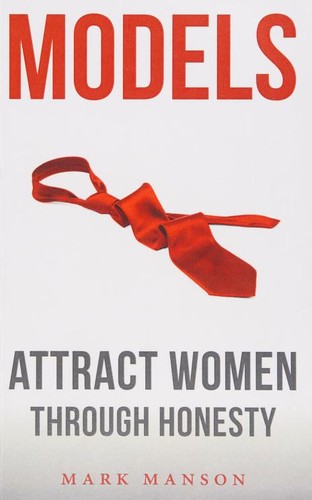
A refreshingly honest approach to attracting women through vulnerability, authenticity, and genuine self-improvement rather than manipulation or scripted routines.
Manson's core argument is that most dating advice focused on tactics and scripted lines fails because it's built around trying to control someone else's reaction, which reads as needy or manipulative even when it's not intended that way. His alternative is built around honesty, expressing genuine interest and intent directly, and being comfortable enough with rejection that you're not performing for an outcome.
The book is organized in three sections that build on each other: Honesty (why vulnerability outperforms performance), Fear (the underlying anxieties that make honesty feel dangerous), and Action (the practical habits, the "Prime Directives," that make living this way sustainable). Underneath the dating-specific advice is a broader argument that real confidence isn't the absence of fear, it's being willing to act and be vulnerable despite it, and that this same willingness is what actually reads as attractive, in dating and in most other parts of life.
Manson draws a hard line between two ways of generating interest: performance-based attraction, impressing someone with status, jokes, or a curated version of yourself, and vulnerability-based attraction, generating a genuine emotional response by being honest about who you actually are, including your flaws or interest level. Performance-based attraction is exhausting to maintain and often collapses once the "act" wears thin; vulnerability-based attraction is more durable because there's no act to maintain in the first place.
Directness (saying you're interested instead of hinting, disagreeing instead of performing agreement) is framed as both the most effective tactic and the most respectful one, since it doesn't try to steer someone's feelings through indirect manipulation.
Trying to be universally likable makes you forgettable. Manson argues that clearly expressed opinions and personality, even ones that turn some people off, are what make you memorable and attractive to the people who are actually a fit.
Manson traces most social and approach anxiety back to three underlying fears: fear of rejection, fear of not being "good enough," and fear of losing control of how you're perceived. Naming which fear is actually driving a specific hesitation makes it much easier to work with than treating "nervousness" as one undifferentiated blob.
The fear response to approaching a stranger is treated as a normal, trainable nervous-system reaction, closer to exposure therapy than to a character flaw. Repeated, low-stakes exposure is the mechanism Manson recommends for actually reducing it, not "just being more confident."
Manson closes with a small set of operating principles meant to make the honesty-first approach sustainable day to day rather than just an idea you agree with:
The reframe on rejection, treating it as information instead of a verdict, is the part that's most useful to actually internalize rather than just agree with intellectually. It's simple to state and genuinely hard to apply consistently, especially with someone you're actually interested in.
What's stuck with me longer term is outcome independence, and how little it's actually specific to dating. The same principle shows up in how I try to approach photography critique, car projects that don't go as planned, or just putting a version of myself out into the world (this site included) without needing everyone's approval for it to have been worth doing. Manson's point that a full, interesting life outside of the thing you want is what actually makes you non-needy about it lines up with why I've leaned into building out other parts of my life (cars, photography, skating, flying) rather than treating dating as the one area to optimize.
The emphasis on direct honesty over scripted lines also holds up better across different situations than tactic-based advice, since it doesn't depend on reading a specific playbook correctly in the moment, it's closer to a principle than a script.